

A TRIPs Reflection by Joan Micheni – MPA International Student
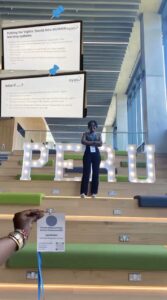
I walked into the just concluded Towards Relational Public Services Conference with curiosity, a writing pad and the quiet sense that something overwhelmingly important was happening. By the end of the first day, it was clear to me that this wasn’t just another policy conference event. It was a gathering of people who believe that public services can be bolder, more human and certainly more imaginative, and these same people are willing to build that future they want together.
Over the years, the conference has gained traction. The conversations have deepened over a cup of tea and dark chocolate cookies during short breaks. The critiques have sharpened during workshop sessions. And somewhere along the way, we became a tribe, not just because we all agree, but because we are committed to learning together.
As an MPA student, being present gave me a deep resonance to the occurrences. Relational public services are everything my degree keeps pointing me towards. That is; having systems that learn, public policies shaped with people and for people, and the definition of public value to what actually matters to communities. I couldn’t help but realise how closely RPS aligns with my academic journey through the leadership and governance theories, public value frameworks, human-centred and learning-centred approaches that I studied suddenly feeling alive in practice as I listened through the sessions.
Personally, one of the most captivating ideas from the 2nd day was this: relationships function differently because they are voluntary, deeply sensitive to boundaries and co-created. Helping is not merely an act of kindness, but an act of shared agency. Power, in relational work, is not control but co-creation. We are shaped by the words and actions of others. We see ourselves through other people and the consequences of our actions depend on what others do. This is our why. And also why they are difficult. Though, not every sector needs relationality. Some need efficiency and standardisation. But where human complexity, vulnerability and care are involved, relationality is not optional. It is the work!
One big question echoed through the conference: What if the limits of public services are not design but imagination? Relational practice invites us to see what is usually invisible to the human eye and on paper. That is the agency, emotion, trust, possibility to see change and the small details that tells us what matters to people. It asks us to go beyond performance-only thinking and create adaptive spaces where learning is continuous and evolving. We are, as one speaker put it building the bridge as we cross it. As scary as that sounds, it’s our method!
Relationality redistributes power. It questions who gets to decide? Who gets to speak? Who is included in the ‘we’? Every choice we make established a “we”. Every design decision includes some people and excludes others. This is why co-design with communities is both powerful and vulnerable. Unquestionably, there was nervousness in the room about “crafting” with community members, but also lots of excitement. Because when people shape rhe services they use, outcomes change. We also explored the sweet spot between academics and practitioners. And this conference was it. Theory and lived experiences meeting in the middle, learning from each other.
Human learning systems (HLS) emerged as a framework of relational public services. Key ideas that resonated deeply include prevention improves long-term outcomes, power devolved to communities leads to better results, understanding people means understanding their interactive systems, data can chart the storm: but lived experience adjusts the sails, learning must be continuous, collaborative and deeply grounded in what matters to the person. We also heard about national reform from the Ministry of Housing’s new public sector approach and Steve Reed’s article on “test, learn and grow”. Relationality is no longer a borderline idea. It is influencing policy.
Technology is entering the relational space, and fast! Raising important questions like: “Can AI be a trustworthy participant in care?” AI can support reflection purposes through transcribing conversations, surfacing patterns and even helping teams learn. But it will never replace human judgement, empathy or trust. We were reminded not to rely on vertical data alone. There’s stories, relationships and lived experience which is the horizontal data we can’t ignore, the ones that keeps systems human. And a warning to administrators, that they can spread distrust and collapse networks when they do not willingly and knowingly cultivate trust, transparency and shared sense-making on complex situations. Relationality requires intentional stewardship.
Relational public services are not just structural, they are emotional. Making this the heart of relational work. We talked about empathy, composure, honesty, boundaries and the kind of emotional toll this work takes. “This work takes its toll” was one of the most honest slides of the 3rd day. Rest. It’s not an indulgence but a way of resistance to conform. It is how we sustain compassion without burning out. Organisations must create norms that support reflection and care.
Certainly as this may seem or sound, relationality is not “soft”. It produces measurable outcomes. The stop-smoking incentive scheme by one of the presenters showed us that trust, empathy, non-judgemental support and flexibility were the real drivers of change. When people feel seen and supported, they change. When services ask, “What would a good service mean to you?”,outcomes improve.
Our check-in sessions was one of my favourite moments. We celebrated the growth in attendance, diversity of opinions, the courage to critique our own movement and the sense of becoming a tribe. We imagined practical activities for next year, such as having a networking exercise with a ball or yarn, symbolising the thread that connects us. We talked about the people we serve which is the community members and how to involve them more deeply in shaping the conference itself. And we began dreaming about the 2026 practice and policy showcase!
As I close, this is a call to imaginations and courage. That relational public services are not a technique but culture; a way of life, a way of seeing and a way of living with others. The bridge is currently being built as we cross it and we are building it together. Practitioners, academics, community members, leaders and dreamers. If imagination is public infrastructure, then this conference was a construction site. And on the last day, I left Manchester Metropolitan University, Dalton building, feeling hopeful about the world we’re building.